
New Model Long-Casting Hard Lure – Fishing Tackle
Product Specifications
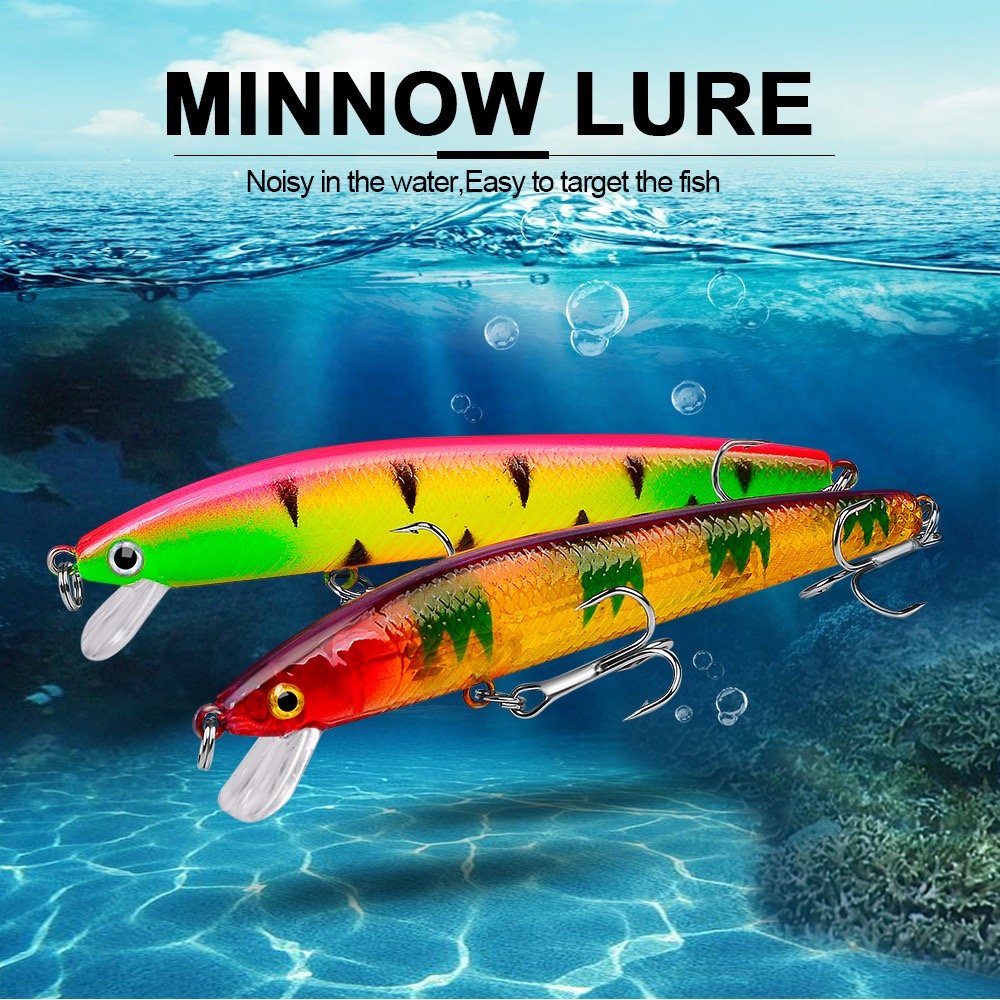
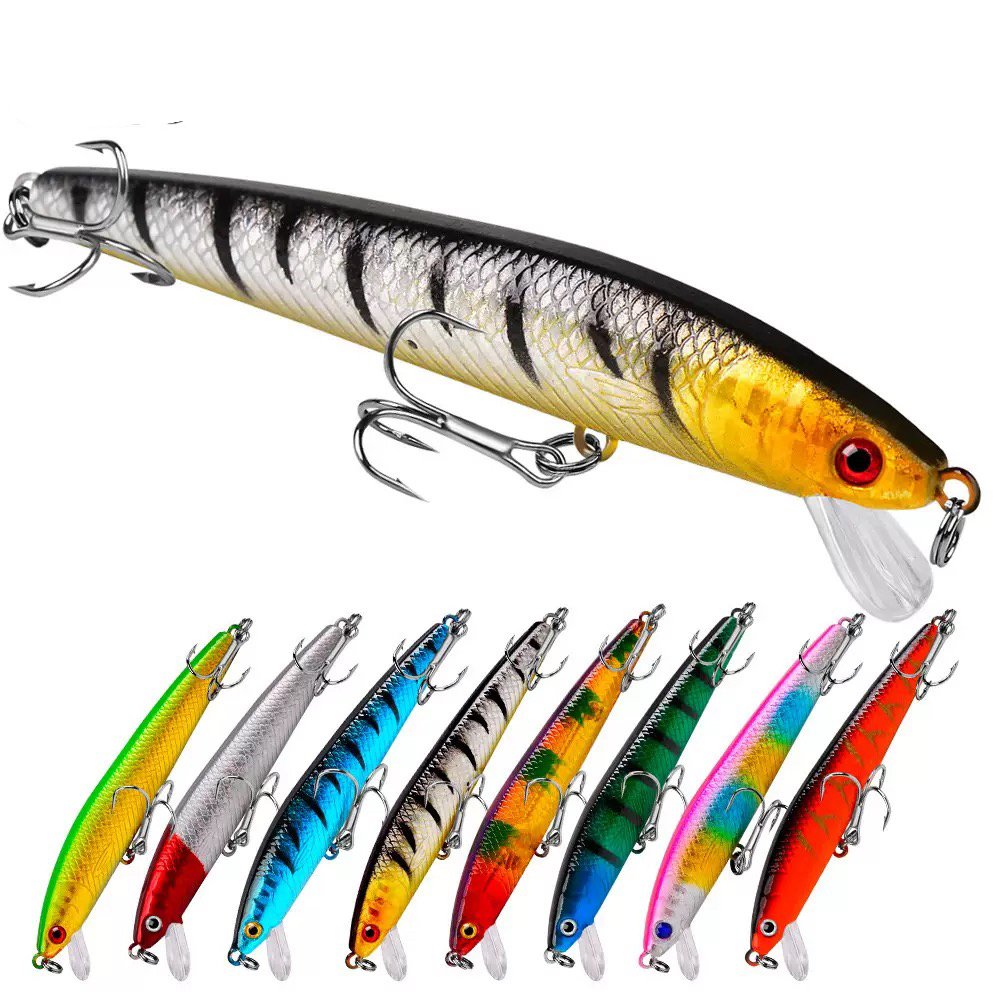
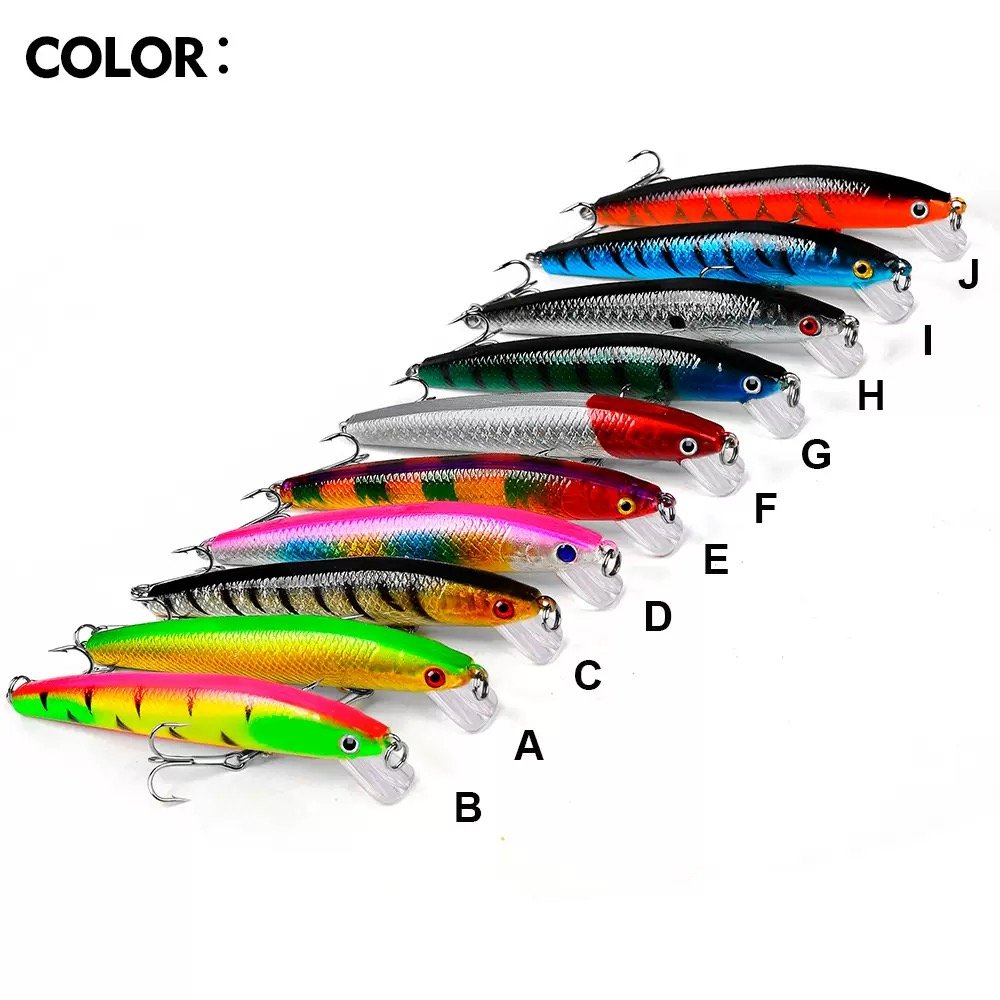
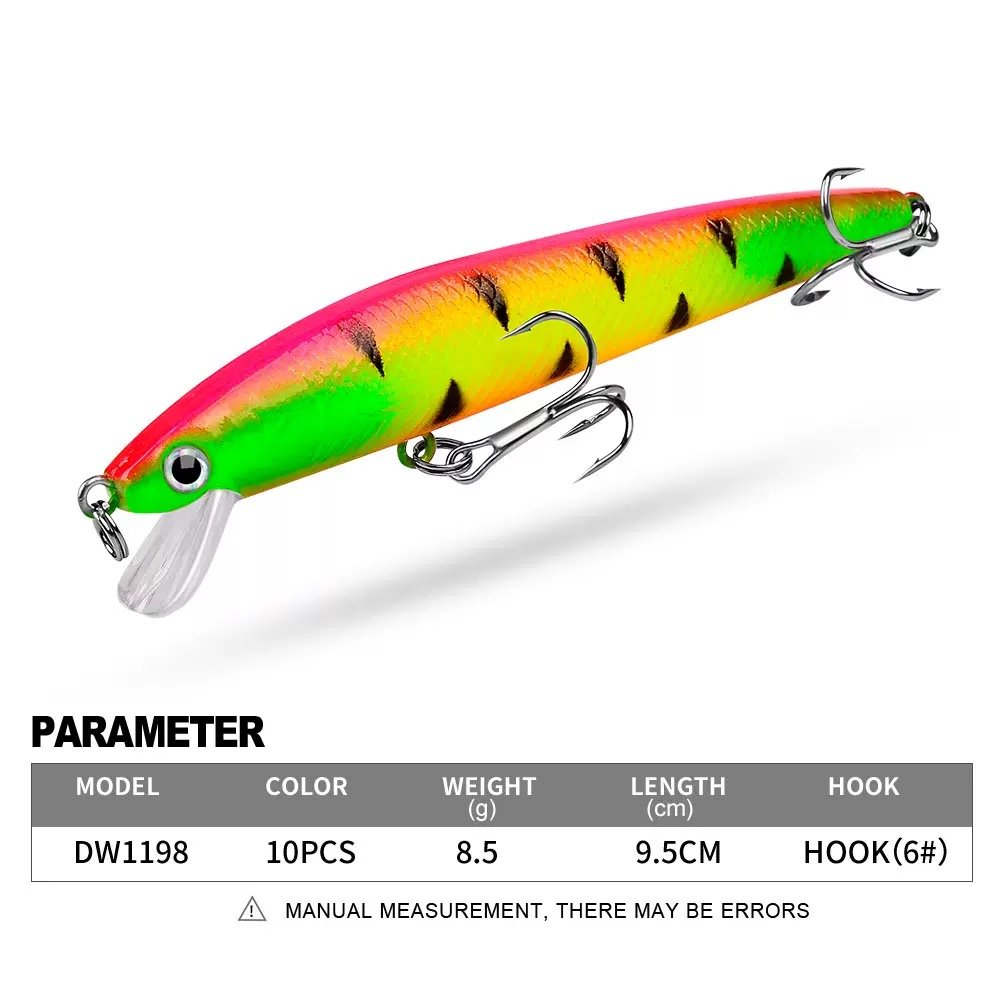
10 Colors Available, 8.5g, 9.5cm Minnow Lure,
Brand: FCP FISHING
Product Name: Minnow Lure
Place of Origin: Guangdong, China
Color Options: 10 Colors
Weight: 8.5g
Length: 9.5cm
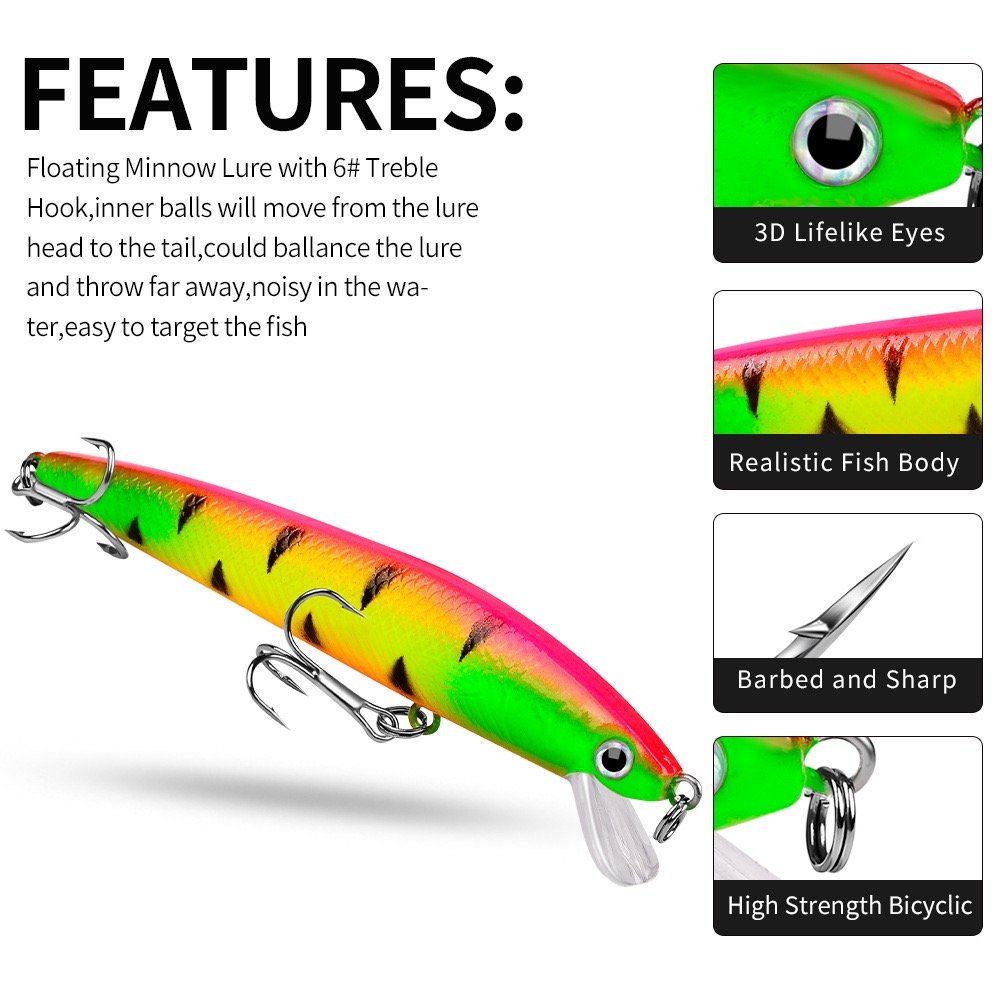
Hook Size: 6# BKB Hook (Black Treble Hook)
Hard Lure: Minnow
Minnows are primarily designed to imitate small fish found in nature. In the wild, small fish exhibit a variety of distinct behaviors—such as swimming alone away from the school, tilting their heads to touch the water surface, gliding leisurely on the water, fleeing from predators, thrashing about when dying, and foraging near the bottom. While anglers can replicate most of these movements through manual manipulation, some actions require specialized lures.
Beyond swimming styles, minnows are also categorized by their buoyancy:
• S (Sinking): The lure sinks when not in motion.
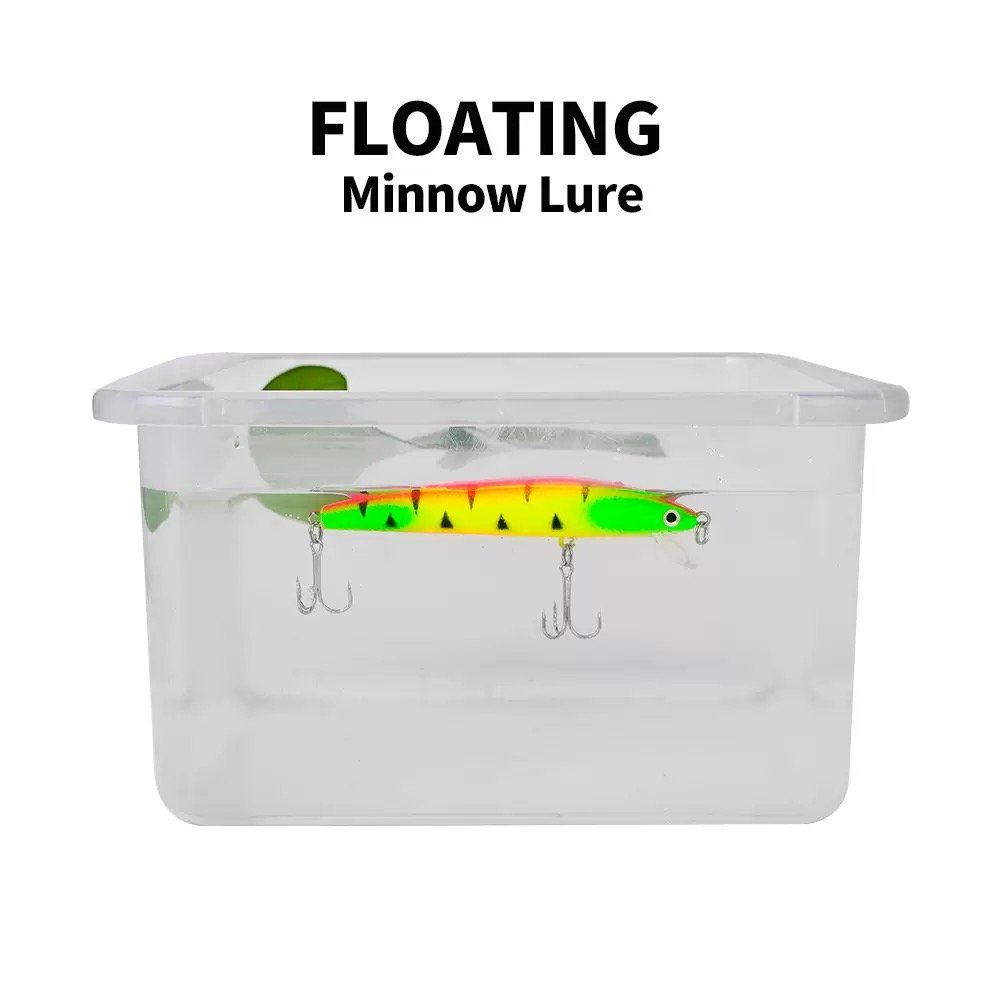
• F (Floating): The lure floats on the water surface when stationary.
• S (Suspending): The lure stays in place in the water column without movement when the angler stops retrieving.
Certain floating minnows are engineered to mimic small fish gliding on the water or water snakes slithering across the surface. Anglers typically impart a side-to-side “walking” motion to these lures through rod manipulation—a technique commonly known as Dog Walking.
Minnows are one of the most widely used lures in angling, targeting fish in the upper water column and dominating the tackle market, which is why we provide a detailed breakdown here.
Shaped like slender, streamlined small fish, minnows are modeled after the naturally occurring minnows that inhabit most water bodies in Europe and America—perennial targets of predatory fish. The success of the first minnow lure crafted by Finland’s Rapala sparked a trend: anglers and manufacturers began replicating the shapes and swimming actions of local minnow species, spawning a vast array of lures with diverse brand names and specifications.
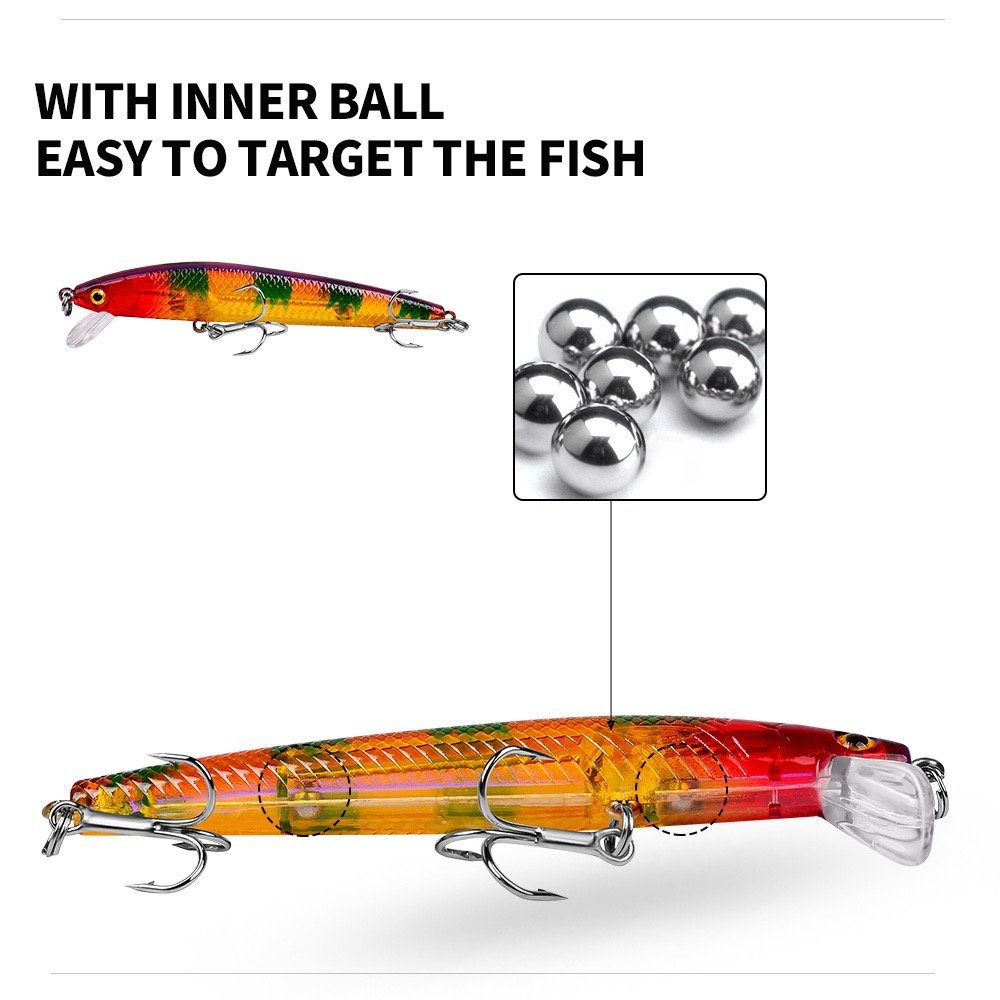
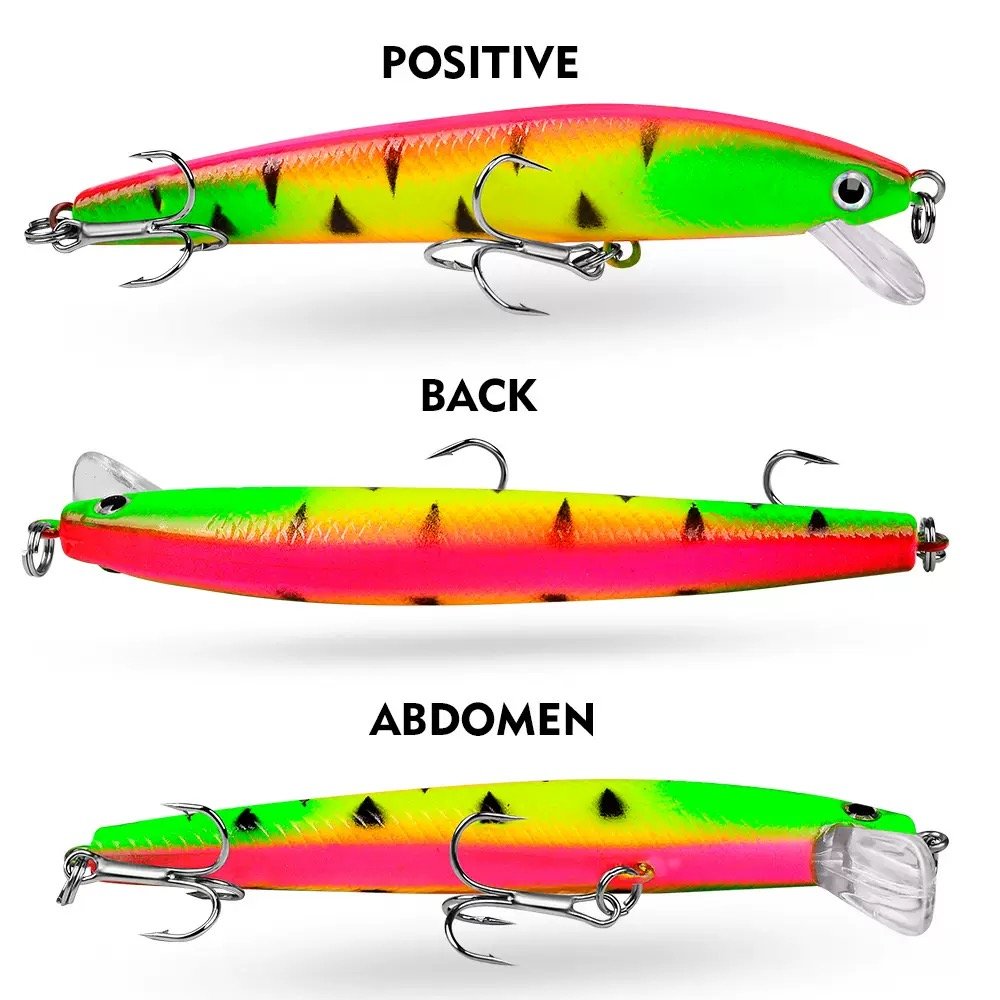
A fundamental design principle for minnow lures is a sleek, streamlined body. In addition to realistic shapes and colors, the most critical attribute is what anglers affectionately call a “seductive swimming action”—a coveted trait that lures predatory fish effectively. To achieve this, most minnows feature a small plastic or wooden lip (also called a diving plate) mounted below the gill area. Usually extending forward and downward from near the gills, the lip forms a 30–45 degree angle with the lure’s mouth. It has a flat surface and a semi-circular leading edge. Some lips are attached directly below the mouth, also angled forward and downward, but with varying angles, lengths, and shapes: some widen toward the tip, while others taper to a sharp point. Many lips incorporate grooves or channels of different designs and are made of plastic or metal—with metal lips often being adjustable for angle.
Most minnows are floating lures by default. When retrieved, the lip displaces water, causing the lure to dive. The diving depth is determined by three factors: the size and angle of the lip, and the speed of the retrieve.
Usage Guide
Minnow lures are relatively easy to operate. After casting, lower the rod tip (or point it toward the water if fishing from an elevated position) and retrieve the line at a steady, constant speed. This is the basic yet highly effective manipulation technique. Once mastered, anglers can add more dynamic variations:
• Erratic Retrieve: While reeling steadily, give the rod tip a sharp, quick jerk every few turns of the reel. This accelerates the lure suddenly, mimicking a small fish fleeing in panic.
• Zig-Zag Retrieve: During retrieval, flick the rod tip gently to the left, then to the right, repeating the motion continuously. This makes the lure swim in a zig-zag pattern in the water, which is highly effective at grabbing the attention of predatory fish.
There are no fixed rules for retrieve speed. If slow retrieval fails to trigger strikes, try a faster pace; if fast retrieval doesn’t entice pursuit, switch back to slow. Experimentation is key to finding the optimal speed. One important note: avoid retrieving the lure so quickly that it skims across the water like a torpedo—predatory fish will struggle to catch up to such a fast-moving target!